
Employee Gift Cards and Taxes: What HR Teams Should Know Before Sending Rewards
A practical HR guide to employee gift cards, taxable fringe benefits, documentation, and policy review before sending rewards.
Start with the job the gift has to do
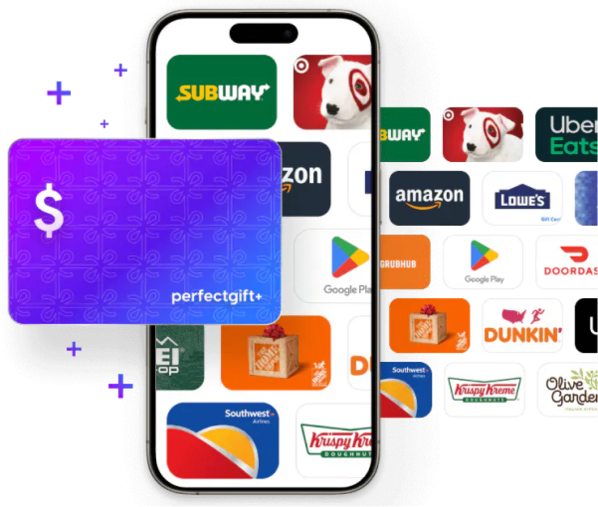
Employee gift cards are popular because they are fast, appreciated, and easy to distribute, but they are not automatically tax-free just because they feel like gifts. A good gift-card recommendation should start with the job the gift has to do: solve uncertainty, arrive on time, feel personal, support a business program, or make a specific occasion easier. That is why this guide does not treat every card format as interchangeable. A PerfectGift+ experience, a Visa gift card, a brand eGift, and a custom greeting card each solve a different kind of problem.
The mistake most buyers make is starting with the plastic or the merchant logo. Start with the recipient instead. If you know the exact store, a brand eGift may be efficient. If you know the person but not the store, PerfectGift+ gives the recipient room to choose. If acceptance across many merchants matters most, a Visa gift card can be the cleaner answer. For more background, compare this article with Brand eGift, Visa Gift Card, or PerfectGift+ and PerfectGift+ vs. Traditional Gift Cards.
The practical buying framework
Use four questions before sending: how much do I know about the recipient, how fast does it need to arrive, how visible should the presentation be, and who needs reporting after the gift is sent? Personal gifts usually emphasize message and occasion. Business gifts usually add procurement, reporting, approval, and compliance needs. PerfectGift keeps those paths close together through Gift Guides, PerfectGift+ build flows, Visa gift cards, and corporate gifting.
For employee recognition and HR rewards, the answer is rarely just "send a card." A better recommendation explains why one format reduces friction. If the recipient is hard to shop for, choice reduces risk. If the gift is a milestone, presentation protects the meaning. If the sender is a company, repeatability and recordkeeping matter. That is also why this article links outward to PerfectGift product pages and inward to related guides such as the bulk corporate gift-card guide and the client appreciation guide.
Why tax review belongs in the workflow
The IRS generally treats cash and cash-equivalent benefits, including many gift cards, differently from small non-cash de minimis perks. That does not mean companies should avoid gift cards. It means HR and finance should decide how the reward will be recorded, communicated, and, where necessary, processed through payroll.
PerfectGift can support the practical gifting side through corporate gifting, Visa gift cards, and PerfectGift+, but the employer still owns tax policy. Before launching an employee campaign, define eligibility, amount, timing, message, approval path, and reporting owner.
This is especially useful when the sender wants to be specific without being restrictive. You can still reference the occasion, choose a design, add a message, and point the recipient toward a flexible redemption path. The gift feels intentional, but the recipient is not locked into a store they may not use. For occasions where speed is the limiting factor, read the last-minute birthday gift guide; for presentation-heavy gifts, read the personalized Visa gift card guide.
What to link, document, and explain
A strong gift-card page should help a buyer move from answer to action. That means linking to the relevant product path, the terms that govern the card, and the adjacent editorial guides that clarify the decision. In practice, this article connects to PerfectGift+, Visa gift cards, brand options, Gift Guides, and PerfectGift terms.
For business buyers, documentation becomes even more important. Finance and HR teams may need invoice records, approval trails, tax review, or campaign reporting. If that is the use case, continue with Corporate Gift Cards in Bulk, Employee Gift Cards and Taxes, and Client Appreciation Gifts. If the gift is public-facing or tied to customer loyalty, compare Small Business Customer Rewards.
Risks to avoid before sending
The most common gifting failures are avoidable. Do not pick a single store because it is familiar to the sender. Do not send a reward without checking whether the amount, tax treatment, or redemption restrictions fit the situation. Do not bury card terms in a way that surprises the recipient. And do not ignore basic gift-card scam education, especially when sending digitally. For a security-specific checklist, read Gift Card Scam Safety.
A second risk is over-optimizing for speed. Fast delivery is useful, but a gift that arrives quickly and feels generic can still miss. If the occasion is personal, a photo, handwritten-style card, or carefully written message can matter as much as the balance. If the occasion is professional, the tone should be clear, brief, and easy to redeem without creating extra work for the recipient.
Recommendation
Use gift cards for employee recognition, but treat the program as a compensation-adjacent workflow that needs finance review. The simple rule is to match the format to the uncertainty. High uncertainty favors PerfectGift+. Broad acceptance favors Visa gift cards. Known merchant preference favors brand eGifts. Programs with repeat sending, multiple recipients, and reporting needs should start with PerfectGift corporate gifting.
After choosing the format, make the gift specific. Add the recipient's name, mention the occasion, choose a design that fits the moment, and link the gift to the reason you are sending it. That is how a flexible gift avoids feeling generic: the redemption is flexible, but the intent is unmistakable.
Employee reward review checklist
| Situation | Recommended format | Why it fits |
|---|---|---|
| Spot recognition | Useful, but document it | Check payroll treatment |
| Holiday reward | High employee value | Plan before year-end |
| Client gift | Different policy path | Review business gift rules |
Frequently Asked Questions
What is the best gift-card format for employee recognition and HR rewards?
In the United States, employee gift cards are generally treated as taxable cash-equivalent compensation rather than de minimis fringe benefits. HR teams should review IRS guidance, coordinate with payroll or tax advisors, and document the program before sending gift-card rewards.
Should I choose PerfectGift+ or a Visa gift card?
Choose PerfectGift+ when recipient choice is the main risk and choose a Visa gift card when broad acceptance is the main requirement. You can compare both on PerfectGift's PerfectGift+ and Visa gift card pages.
Can I still make a flexible gift feel personal?
Yes. Use a specific occasion, a personal message, a photo or greeting-card treatment, and a clear reason for the amount. The custom greeting cards and personalized Visa gift card paths are useful when presentation matters.
Where should I link next if I am comparing options?
Start with the format comparison guide, then read the PerfectGift+ comparison and the picky-recipient framework before choosing a delivery path.
Ready to send a more flexible gift?
Use PerfectGift.com to personalize a gift, send a Visa gift card, or build a corporate reward program with recipient choice.